
Blog · July 9, 2026
How Tamworth Retailers Get Recommended by AI Assistants
AI assistants are replacing Google searches for local shopping decisions. Here's exactly how Tamworth retail businesses can show up when customers ask ChatGPT, Siri, or Google Assistant for recommendations.
 ·Founder GeoRank
·Tamworth, NSW
·Founder GeoRank
·Tamworth, NSW

Key Takeaways
- AI assistants like ChatGPT, Siri, and Google Assistant now drive real foot traffic — Tamworth retailers not optimised for them are invisible to an entire buyer segment.
- AI recommendations are built on structured data signals: Google Business Profile accuracy, schema markup, product feeds, and review volume all directly influence which businesses get cited.
- The '30% rule' in AI refers to the estimated share of web searches now handled by AI-assisted answers — retailers without AI-readable content miss that traffic entirely.
- Optimisation costs start from as little as $29/month with services like GeoRank Labs, making AI visibility accessible to independent Tamworth retailers of any size.
Why Tamworth Retailers Need to Be Visible to AI Assistants
When a shopper in Tamworth asks their phone 'where can I buy a winter jacket near me?' they are no longer guaranteed to see a Google results page. Increasingly, they get a spoken or typed answer from an AI assistant — and that answer names specific businesses. If your store is not in that answer, the customer does not walk through your door. This shift is happening fast and it is happening in regional NSW. Tamworth's retail strip on Peel Street faces the same AI-driven disruption as stores in Westfield Sydney, with one key difference: fewer local competitors have optimised for it yet, which means the window to gain a first-mover advantage is still open.
How can I use AI in my retail business?
Beyond getting recommended, Tamworth retailers can use AI to automate inventory alerts, personalise email campaigns, answer after-hours customer enquiries via chat, and generate product descriptions at scale. The most immediate commercial return, however, comes from optimising your business data so AI assistants surface you to buyers before they even visit a competitor's website.
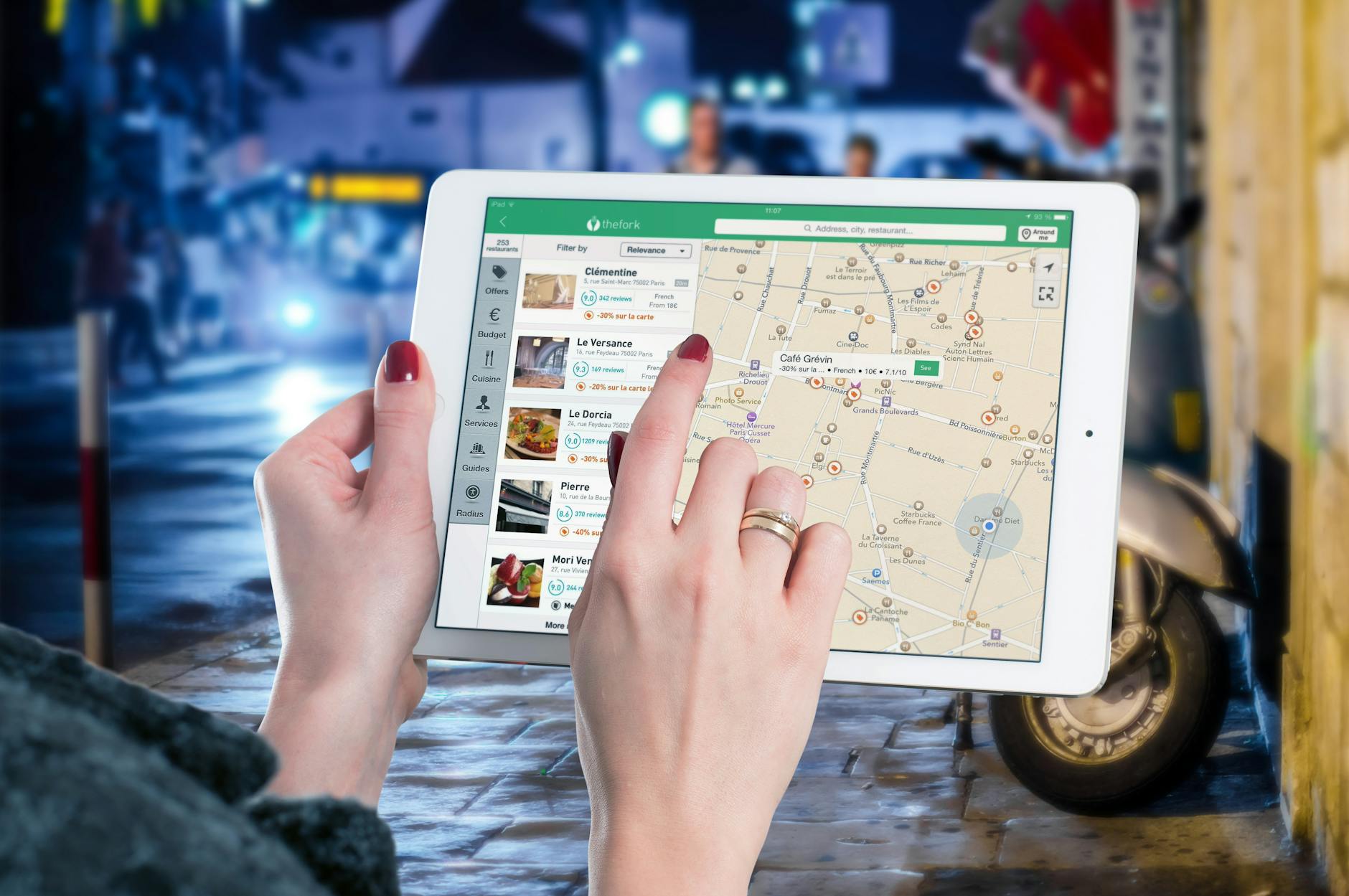
How AI Assistants Choose Which Retail Businesses to Recommend
AI assistants do not guess. When ChatGPT, Google Assistant, Siri, or Alexa recommend a business, they are drawing on structured, verifiable data from multiple sources — and they apply consistent ranking logic. Understanding that logic is the first practical step every Tamworth retailer needs to take.
How do I get AI to recommend my business?
To get AI assistants to recommend your retail business, you need consistent business data across all platforms (name, address, phone, hours), a fully completed and regularly updated Google Business Profile, structured schema markup on your website that labels your business type and product categories, and a steady flow of genuine customer reviews. AI assistants cross-reference these signals to verify that a business is real, active, and relevant to the query. Missing or contradictory data causes AI systems to skip your listing in favour of a competitor with cleaner records.
What is the 30% rule in AI?
The '30% rule' refers to research estimates suggesting that approximately 30% of all search queries are now resolved by AI-generated answers rather than traditional blue-link results pages. For retail businesses, this means roughly one in three potential customers may never see your website in a conventional search — they receive an AI-curated recommendation instead. Retailers who have not structured their data for AI consumption are effectively invisible to that 30% of buyers.
According to Salesforce research, over 60% of consumers are open to using AI assistants to help them make purchasing decisions — a figure that is accelerating as voice and chat-based search becomes the default on mobile devices.
5 Steps to Optimise Your Retail Business for AI Discovery
These five steps are ranked by impact and are achievable by any independent Tamworth retailer, whether you run a clothing boutique on Peel Street, a hardware store near the Tamworth Regional Airport precinct, or a specialty food shop in the Tamworth CBD. Work through them in order — each step compounds the one before it.
Step 1: Lock down your Google Business Profile
Your Google Business Profile (GBP) is the single highest-weight signal AI assistants use for local retail recommendations. Complete every field: business category, secondary categories, opening hours (including public holidays like the Tamworth Country Music Festival period in January), a description with your primary products, and at minimum 10 current photos. Add your product catalogue using GBP's Products tab — this is often skipped by small retailers and it directly feeds AI shopping queries.
Step 2: Apply LocalBusiness and Product schema markup
Schema markup is structured code added to your website that labels your content in a language AI systems and search engines read directly. At minimum, Tamworth retailers need LocalBusiness schema (with geo-coordinates, address, and opening hours) and Product schema for key stock items. If you use Shopify or WooCommerce, plugins can generate this automatically; on custom sites, a developer or an SEO service like GeoRank Labs can implement it within a day.
Step 3: Syndicate your business data with a citation management tool
AI assistants pull data from aggregators including Yelp, True Local, Yellow Pages, Apple Maps, and Bing Places. If your store name, address, or phone number differs across these sources — even slightly — AI systems treat it as unreliable and deprioritise you. Use a citation management platform such as Yext or BrightLocal to audit and correct inconsistencies across all directories at once. A single citation audit typically uncovers 15–30 data errors on established retail businesses.
Step 4: Build a review volume strategy
Review count and recency are direct AI ranking signals. A Tamworth retailer with 80 Google reviews averaging 4.6 stars will consistently outrank a competitor with 12 reviews at 4.9 stars when AI assistants generate local recommendations. Set a target of requesting one review per 10 transactions. Use a QR code at your register that links directly to your Google review page — this single tactic can double monthly review acquisition within 90 days.
Step 5: Create AI-optimised product and FAQ content
AI assistants surface retailers who clearly answer common buyer questions. Create a simple FAQ page on your website that answers queries like 'does [store name] in Tamworth stock [product]?' and 'what are the opening hours for [store]?'. Write product descriptions that include specific attributes — size, material, brand, price range — rather than generic copy. This structured content is what AI tools like ChatGPT read and cite when generating shopping recommendations.
The Role of Product Data, Reviews, and Store Information in AI Rankings
AI assistants weight three data categories above all others when recommending retail businesses: the accuracy and completeness of core business information, the quality and volume of customer reviews, and the specificity of product data. Each category feeds a different part of the recommendation algorithm — and a weakness in any one of them caps how often your store gets mentioned.
Why product feed quality matters more than most retailers think
When a shopper asks 'where can I buy a timber bed frame in Tamworth?', an AI assistant like Google's shopping tool or Perplexity needs your product to exist in a structured feed with a clear title, category, price, and availability status. Retailers who upload products with vague titles ('Bed Frame - Large') and no pricing are passed over in favour of competitors whose feeds are specific ('Queen Timber Bed Frame — Natural Oak, $749, In Stock'). Structured product feeds submitted to Google Merchant Center or Meta Shops are indexed by multiple AI platforms simultaneously.
How reviews influence AI recommendation frequency
Reviews serve two functions in AI recommendations: they act as a trust signal (volume and rating) and they contain natural language that AI systems use to understand what your store actually sells and who it serves. A Tamworth clothing retailer whose reviews mention 'great range of workwear for the mining industry' will be recommended to relevant buyers even if those exact words do not appear in the store's own content. Actively responding to reviews — even briefly — also signals to AI systems that the business is engaged and current.
| AI Platform | Primary Data Source | Best Optimisation Action | Timeline to Impact |
|---|---|---|---|
| Google Assistant | Google Business Profile + schema | Complete GBP, add Product schema | 2–4 weeks |
| ChatGPT (with browsing) | Website content + citations | FAQ pages, structured product copy | 4–8 weeks |
| Siri / Apple Maps | Apple Maps listing + Yelp | Claim and complete Apple Maps listing | 2–6 weeks |
| Alexa | Bing Places + Yext network | Syndicate citations via Yext or BrightLocal | 3–6 weeks |
| Perplexity AI | Web content + authoritative sources | Earn local media mentions and backlinks | 6–12 weeks |
| Gemini (Google AI) | GBP + Google index | Update GBP weekly, maintain review velocity | 2–4 weeks |
Tools and Platforms to Get Your Tamworth Retail Business AI-Ready
The right stack of tools can reduce the time a Tamworth retailer spends on AI optimisation to under two hours per month, once the initial setup is complete. The tools below are listed in priority order based on impact-per-dollar for independent and small-chain retailers in regional NSW.
Which AI tool is best for retail business?
For getting recommended by AI assistants, the highest-impact platforms for Tamworth retailers are Google Business Profile (free), Google Merchant Center (free for product feeds), Yext or BrightLocal for citation syndication ($30–$80/month), and a schema markup plugin for your website CMS. For AI-driven content that earns citations from ChatGPT and Perplexity, GeoRank Labs offers AI-optimised content creation from $29/month — purpose-built for local businesses in regional areas like Tamworth and the New England region.
Free vs paid tools: what actually moves the needle
Free tools — GBP, Google Merchant Center, Apple Maps, Bing Places, True Local — handle distribution. Paid tools handle consistency and content quality. A citation management platform at $30–$50/month is worth prioritising over paid advertising for most small retailers, because it fixes data errors that are actively suppressing your AI recommendations right now. If you want to convert AI-driven traffic into confirmed sales enquiries, our AI Traffic Conversion services at GeoRank Labs layer structured content and citation building on top of your existing presence to create a compounding visibility effect.

Common Mistakes Retailers Make With AI Assistant Visibility
Most Tamworth retailers who are not appearing in AI recommendations are not being penalised — they are simply being ignored because of fixable data gaps. These are the most common mistakes, ranked by how often they appear and how much impact they have on AI recommendation frequency.
Inconsistent NAP data across directories
NAP stands for Name, Address, Phone. If your store is listed as 'Tamworth Outdoors' on Google but 'Tamworth Outdoor Supplies Pty Ltd' on True Local, AI systems treat these as two different businesses and reduce confidence in both listings. Audit every directory listing and standardise your business name, address format, and phone number exactly — including whether you use 'Street' or 'St' in your address.
No structured data on the website
Over 70% of small retail websites in regional NSW have no schema markup at all. Without it, AI systems have to guess what your business sells, where you are located, and when you are open — and they often guess wrong or skip you entirely. Adding LocalBusiness schema takes less than 30 minutes on most CMS platforms and has an immediate effect on how AI tools read your site.
Treating AI optimisation as a one-time task
AI assistants continuously re-index business data. A GBP listing that was complete 18 months ago but has outdated hours — particularly relevant for Tamworth retailers who adjust hours around major events like the Country Music Festival or Easter — will generate incorrect AI recommendations and then earn negative reviews when customers arrive to find you closed. Schedule a monthly 15-minute GBP audit as a recurring calendar item.
Ignoring review recency
A Tamworth retailer with 200 Google reviews, the most recent of which is 14 months old, will be outranked by a competitor with 40 reviews where 15 were posted in the last 90 days. AI systems weight recency heavily as a proxy for business activity. A stalled review profile is one of the fastest ways to lose AI recommendation share to a newer competitor.
Is your Tamworth store invisible to AI assistants right now?
GeoRank Labs runs a full AI visibility audit for Tamworth retailers — checking your GBP, citations, schema, and product data against what the major AI assistants actually see. Plans start from $29/month and are built specifically for regional NSW businesses that need real local results, not generic SEO advice.
Frequently Asked Questions
How long does it take for AI assistants to start recommending my retail business after I optimise?
Google Assistant and Gemini typically reflect GBP changes within 2–4 weeks. ChatGPT and Perplexity, which rely on web content and external citations, generally take 6–10 weeks to incorporate new structured content. Citation directory updates via tools like Yext propagate across Siri and Alexa in 3–6 weeks. Expect meaningful improvement across all platforms within 90 days of completing the full five-step process.
Do I need a website to get recommended by AI assistants as a Tamworth retailer?
A website is not strictly required, but it significantly expands the range of AI platforms that can recommend you. Google Assistant can surface your business from GBP alone, but ChatGPT, Perplexity, and Bing-based AI tools (including Siri for many queries) rely on indexable web content. A basic single-page website with schema markup and a product list will outperform no website in almost every AI recommendation scenario.
What is the most important factor for getting recommended by AI shopping assistants?
Google Business Profile completeness is the single highest-weight factor for local AI recommendations. A fully completed, regularly updated GBP with products listed, recent photos, and consistent review activity will outperform a technically sophisticated competitor with a neglected GBP in the majority of local shopping queries.
Are AI assistant recommendations different from regular Google local search rankings?
Yes. Traditional local SEO prioritises link authority, on-page keywords, and proximity. AI assistant recommendations weight structured data accuracy, review recency, and cross-platform consistency more heavily. A business can rank on page one of Google Maps but still be absent from AI assistant responses if its schema markup, citation data, or product feeds are incomplete.
How much does it cost to optimise a Tamworth retail business for AI recommendations?
The core tools — Google Business Profile, Google Merchant Center, and Apple Maps — are free. Citation management platforms like BrightLocal cost $30–$80/month. A full AI optimisation service including content creation and ongoing citation management, such as those offered by GeoRank Labs, starts from $29/month, making professional AI visibility accessible to independent Tamworth retailers without large marketing budgets.